




Lotto. Enrico della Torre
Opening: 18 September, 8.00 pm
18 September – 20 November 2026
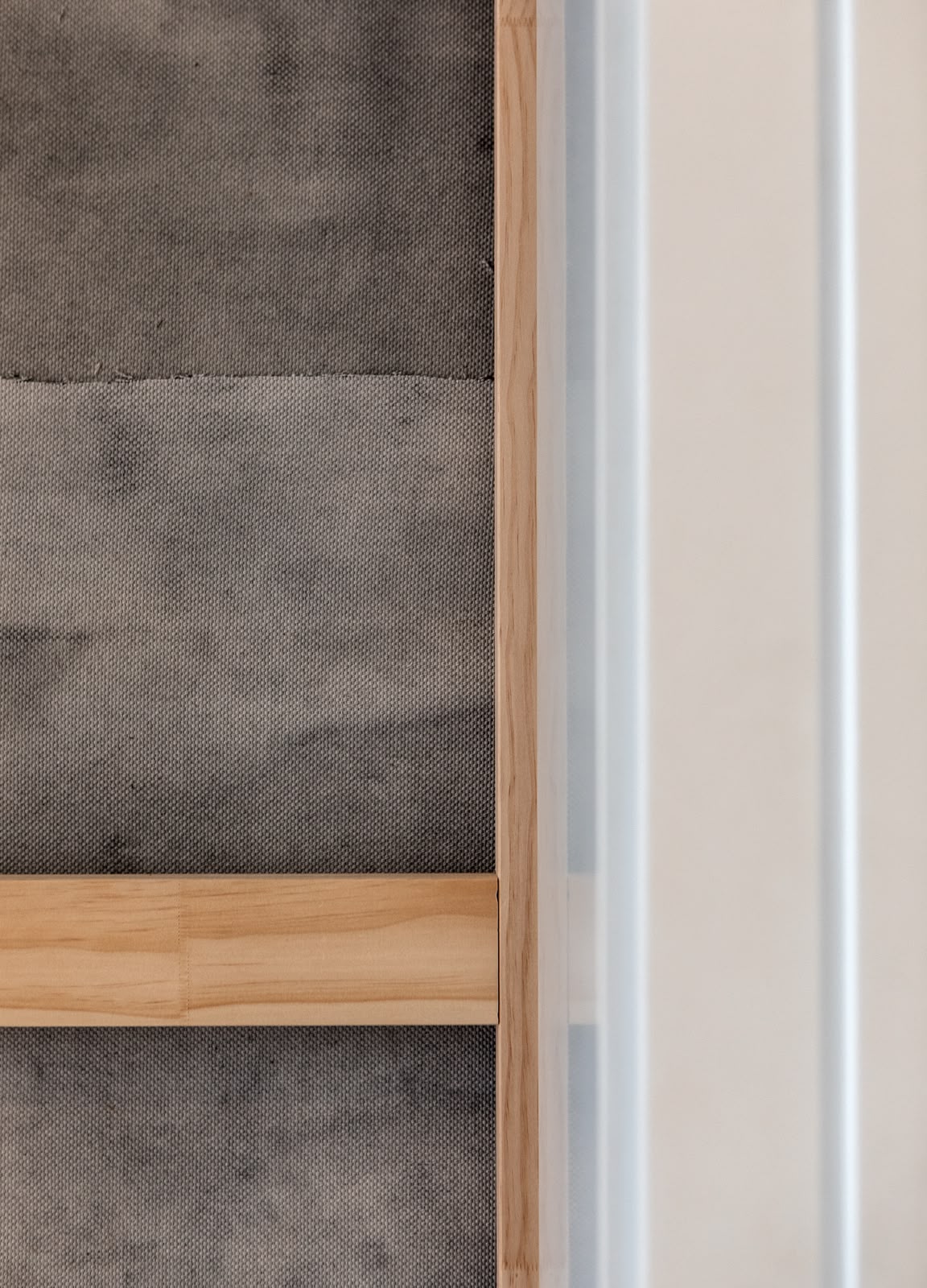
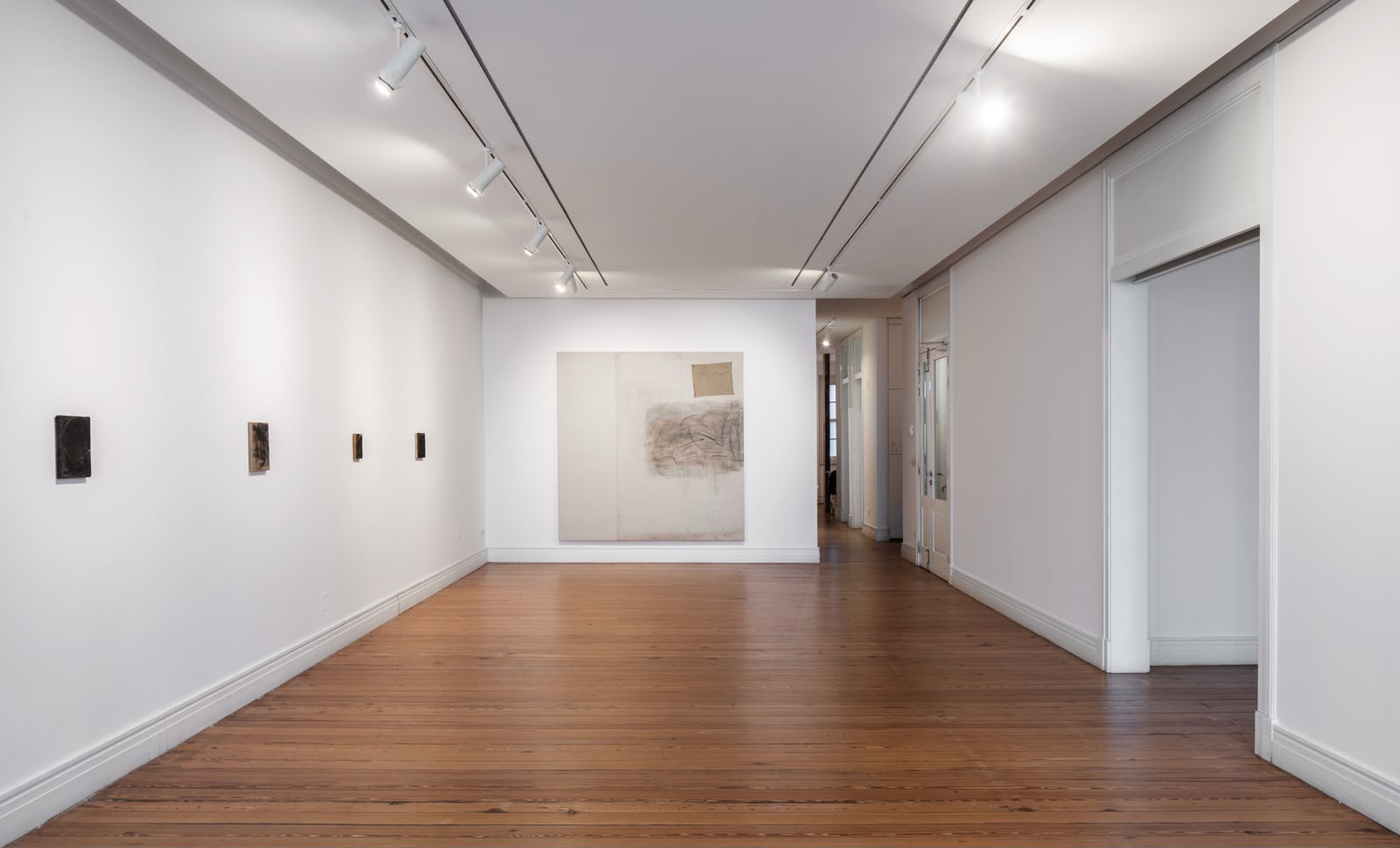
The work of Enrico Della Torre (Italy, 1988) revolves around an inquiry into the possibilities and limits of painting as a language and as a practice. His work is built upon a constant dialogue between the spontaneous and the premeditated, between gesture and structure, conscious decision-making and that which emerges as a consequence of chance. Gestural lines, intuitive cut-outs and monochrome surfaces of black charcoal coexist in an unstable balance that makes visible the very processual condition of painting.
A fundamental facet of his practice stems from the recovery of fragments taken from discarded or unfinished paintings. Removed from their original context and reincorporated into new compositions, these fragments acquire an unexpected autonomy. Their juxtaposition produces relationships of light and shadow, interruptions and new spaces within the pictorial plane. Painting thus appears as a territory that can be dismantled, reorganized and reinterpreted.
Chance and accident play a decisive role in this process, introducing a certain unpredictability into decision-making, and it is within this margin of indeterminacy that play, irony and self-criticism find their place. The artist often intervenes in those areas he considers most successful or believes he understands best, while choosing to preserve those in which doubt and uncertainty remain open. In this way, insecurity ceases to be an obstacle and becomes a tool for investigation.
In Della Torre’s practice, disenchantment with established discourses coexists with a persistent need to return to painting, generating an ambiguous space where tradition functions simultaneously as a starting point and an object of suspicion. Construction and destruction, control and accident, intuition and reflection remain in tension, turning painting not so much into a result as into an open field of inquiry into its own conventions, limits and possibilities.
I take the fabrics out of the studio and carry them to the grass. I spread them on the ground and move them around, imagining possible cut-outs. The space I’m working in is not very large, which leads me to paint each fabric separately, without the others being visually present. Only when I lay them out in the garden can I see them all together. After a while, I lie down on top of them and look up at the sky. Next to me is a book I bought a couple of months ago: Lorenzo Lotto: il richiamo delle Marche, a mapping and analysis of the painter’s works in the Italian region of Le Marche. Vasari recounts that, already in his old age and beset by constant financial difficulties, Lotto decided in 1554 to withdraw from worldly matters and retire permanently to the region of Le Marche, settling in the Monastery of the Holy House of Loreto. It is known that there, with no commissions, he tried to sell his own works through a dealer at public auctions, without any success. The pieces that remain today in Le Marche are, for the most part, precisely those from his final period: the ones he failed to sell. In contrast, a few altarpieces from his early youthful commissions stand out—works far better known and appreciated by the public.